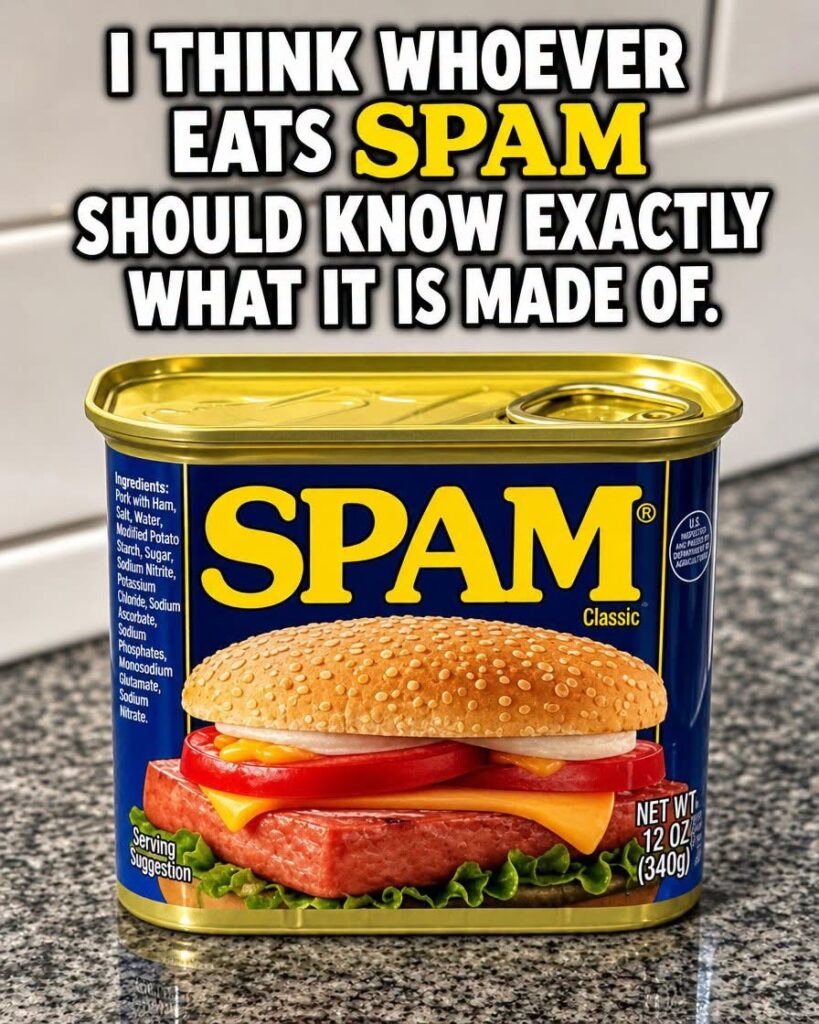
Have you ever walked through the grocery store, spotted that unmistakable blue-and-yellow can, and wondered, “What exactly is SPAM?”
You’re definitely not alone.
For some people, SPAM is a nostalgic food they grew up eating. For others, it’s something they’ve seen on grocery store shelves for years but have never actually tried. And for plenty of people, the biggest question is simply: What is inside that can?
SPAM has been a pantry staple for decades, and its unusual combination of convenience, long shelf life, and versatility has made it a beloved ingredient in kitchens around the world. It has also become something much bigger than a canned meat product. SPAM has found its way into popular culture, history, recipes, restaurants, and even museums.
So, what exactly is SPAM made of? Why was it invented? Where did the name come from? And how did a simple canned meat become such an iconic food?
Let’s open the can and take a closer look.
What Exactly Is SPAM?
SPAM is a canned, cooked meat product made by Hormel Foods. The original product was introduced in 1937 and was developed in Austin, Minnesota.
The basic recipe is surprisingly simple.
Classic SPAM contains six primary ingredients:
- Pork with ham
- Water
- Salt
- Potato starch
- Sugar
- Sodium nitrite
That’s it.
Of course, there are now many different SPAM varieties, and the ingredients can vary depending on the specific flavor. But the original version is made with a relatively short list of ingredients.
The meat is combined with the other ingredients, processed, cooked, and sealed inside the can. The canning process gives SPAM its famous long shelf life and makes it convenient to keep in the pantry until you’re ready to use it.
And that convenience is a huge part of the product’s history.
What Does SPAM Actually Stand For?
Here’s where things get interesting.
Despite the fact that SPAM has been around since the 1930s, the exact meaning behind the name has been the subject of speculation for years.
You may have heard that SPAM stands for “Shoulder of Pork And Ham.” Another theory suggests that it means “Specially Processed American Meat.”
Those explanations certainly sound plausible.
But the truth is that the name was simply chosen as a memorable brand name, and the exact meaning behind the letters has never been officially established in the way many people assume.
The mystery has helped make the name even more interesting.
The word is short, easy to remember, and instantly recognizable. Today, saying “SPAM” immediately brings to mind that familiar canned meat, even though the word itself has taken on an entirely different meaning in the world of technology.
But before “spam” became associated with unwanted emails, there was SPAM the food.
How Was SPAM Invented?
SPAM was introduced by Hormel Foods in 1937, during a time when convenient and affordable food products were becoming increasingly important to American households.
Canned foods had already transformed the way people stored and prepared food. Unlike fresh meat, canned meat could be kept for long periods without refrigeration.
That made it particularly useful for families who wanted a convenient pantry staple.
SPAM fit perfectly into that idea.
It was ready to cook, easy to store, and could be incorporated into countless meals. It didn’t require the same preparation as fresh cuts of meat, making it particularly appealing when convenience was important.
And then something happened that would take SPAM far beyond its original purpose.
The product became incredibly useful during wartime.
SPAM During World War II
SPAM became especially well known during World War II, when its long shelf life and portability made it useful for military personnel and civilians.
Fresh meat wasn’t always easy to transport or store, particularly in places where refrigeration was limited or supply chains were disrupted.
A canned meat product solved some of those problems.
SPAM could travel long distances, remain shelf-stable, and provide a source of meat that could be prepared in a variety of ways.
It became associated with military rations and was shipped to different parts of the world.
The product’s wartime history played a major role in spreading SPAM internationally.
People encountered it in places where they might not otherwise have known about the product, and its popularity continued in several countries long after the war ended.
Today, SPAM is especially popular in places such as Hawaii and parts of Asia, where it has become an established part of local food culture.
Why Does SPAM Last So Long?
One of the most recognizable characteristics of SPAM is its long shelf life.
So how can a can of meat sit in your pantry for such a long time?
The answer is canning and preservation.
SPAM is cooked and sealed in a can, which creates a shelf-stable product when processed correctly. The sealed container helps protect the food from outside contamination.
Sodium nitrite also plays a role in the product.
What Is Sodium Nitrite?
Now, let’s talk about one of the ingredients that tends to raise the most questions: sodium nitrite.
Sodium nitrite is commonly used in processed meats as a preservative and curing ingredient. It helps prevent the growth of certain harmful bacteria and contributes to the characteristic color and flavor associated with cured meats.
It’s important to understand that sodium nitrite isn’t unique to SPAM. It is used in a variety of processed meat products.
At the same time, some people choose to limit how much processed meat they consume, including products containing added sodium and preservatives.
SPAM is also relatively high in sodium, which is something people who are watching their sodium intake may want to consider.
As with many foods, how much and how often someone eats it is a personal dietary choice.
For people who enjoy SPAM, it can be one ingredient in a varied diet rather than something that has to make an appearance at every meal.
How Did SPAM Get Its Name?
The story behind the name is almost as entertaining as the food itself.
According to the history commonly associated with the brand, the name SPAM was suggested by Ken Daigneau, who was an actor and the brother of a Hormel Foods executive.
Hormel held a naming contest when it was developing the product’s branding.
Ken Daigneau reportedly suggested the name “SPAM” and won a $100 prize for his idea.
That might have seemed like a nice little prize at the time, but the significance of that suggestion became much bigger than anyone could have imagined.
The name eventually became one of the most recognizable food brands in the world.
Imagine coming up with a four-letter name during a company contest and discovering decades later that millions of people know exactly what it means.
Not a bad day’s work.
What Does SPAM Taste Like?
If you’ve never tried SPAM, you may be wondering what it actually tastes like.
The original variety has a salty, savory flavor with a texture that’s somewhere between a traditional canned meat product and a firm meat loaf.
It is already cooked when you open the can, which means you don’t technically need to cook it before eating it. However, many people prefer to fry, grill, bake, or otherwise heat SPAM before serving it.
Pan-frying is particularly popular because it gives the outside a crisp, browned texture while keeping the inside tender.
That contrast is part of what makes SPAM appealing to its fans.
Of course, taste is subjective. Some people absolutely love it, while others aren’t quite sure what to make of it.
And that’s okay.
SPAM is definitely one of those foods that people tend to have strong opinions about.
SPAM Comes in More Than One Flavor
If you’ve only ever seen the original can, you might be surprised to learn just how many SPAM varieties are available.
Over the years, Hormel has introduced different flavors and versions designed to appeal to different tastes.
Depending on the market, you may encounter varieties such as:
- Original SPAM
- Hickory Smoke
- Hot & Spicy
- SPAM with Cheese
- Garlic-flavored varieties
- Teriyaki-inspired varieties
- Reduced-sodium options
The availability of different flavors can vary by location, but the basic idea remains the same: take the classic canned meat and give it a new flavor profile.
That versatility is one reason SPAM has managed to remain relevant for so many decades.
What Can You Make With SPAM?
Here’s where things get really interesting.
SPAM isn’t limited to being sliced and placed between two pieces of bread.
You can cook it in a surprisingly large number of ways.
For breakfast, you can dice it up and add it to scrambled eggs or a breakfast hash. You can fry slices and serve them alongside eggs, potatoes, or toast.
For lunch, SPAM can be turned into sandwiches.
For dinner, it can be added to fried rice, noodles, casseroles, or stir-fries.
You can even use it as a pizza topping.
And one of the most famous uses for SPAM is in SPAM musubi, a Hawaiian snack that pairs grilled slices of SPAM with rice and nori.
This is a perfect example of how SPAM has been incorporated into local food traditions rather than simply being eaten exactly as it was originally marketed.
SPAM and Hawaiian Food Culture
SPAM has a particularly fascinating relationship with Hawaii.
The product became widely available there during and after World War II, and it eventually became an important part of the local food landscape.
Today, SPAM appears in everything from breakfast plates to snacks and convenience-store meals.
SPAM musubi is perhaps the most recognizable example.
A slice of grilled SPAM is placed on a block of rice and wrapped with nori. It’s portable, inexpensive, filling, and flavorful.
The dish has become so recognizable that it is now closely associated with Hawaiian food culture.
This is one of the most interesting things about SPAM: although it originated in Minnesota, its culinary identity has been shaped by communities all over the world.
SPAM Around the World
SPAM’s popularity isn’t limited to the United States.
The product is enjoyed in many countries and has been incorporated into local dishes in different ways.
In parts of Asia, SPAM is commonly used in fried rice, noodles, stews, sandwiches, and other meals.
Its long shelf life and convenience have historically made it particularly useful in places where food availability and storage have presented challenges.
In South Korea, for example, SPAM has become a familiar ingredient and is often given as a gift during holidays.
That may seem surprising if you’re used to thinking of canned meat as an inexpensive pantry item, but it demonstrates just how differently foods can be perceived in different cultures.
A product that one person sees as humble or nostalgic can become a highly valued ingredient somewhere else.
How Do You Cook SPAM?
Since SPAM is already cooked, you don’t have to prepare it in the same way you would raw meat.
You can eat it directly from the can, although many people prefer to cook it.
One of the easiest methods is pan-frying.
Simply slice the SPAM into pieces and place them in a skillet. As they cook, the edges can become browned and crispy.
You can also grill slices, bake them in the oven, or dice them before adding them to another dish.
The key is that SPAM is incredibly adaptable.
If you’re someone who likes experimenting in the kitchen, you can treat it almost like an ingredient rather than a complete meal.
Add it to something you’re already making, and suddenly you have an entirely different dish.
Why Has SPAM Stayed Popular for So Long?
SPAM has been around for more than eight decades, which is impressive for any food product.
Part of its staying power comes down to convenience.
It’s inexpensive compared with many fresh meat options, doesn’t require refrigeration before opening, and can be prepared quickly.
But there’s also a nostalgia factor.
Many people grew up eating SPAM, so the taste reminds them of childhood, family meals, camping trips, military service, or specific cultural traditions.
Then there’s the novelty.
Even people who don’t regularly eat SPAM know what it is.
The distinctive packaging, unusual name, and recognizable shape have made it one of those foods that people remember.
SPAM has managed to be practical, nostalgic, inexpensive, culturally significant, and a little quirky all at once.
That’s quite an accomplishment for a can of meat.
So, What Is SPAM Really Made Of?
At the end of the day, the answer is much simpler than you might expect.
Classic SPAM is made primarily from pork with ham, water, salt, potato starch, sugar, and sodium nitrite.
There’s no secret mystery meat hiding inside the can.
The unusual reputation surrounding SPAM probably has as much to do with its appearance, texture, and long history as it does with what’s actually inside.
It’s a processed, canned pork product that was designed to be convenient and shelf-stable.
And somehow, that simple idea became a worldwide cultural phenomenon.
Give SPAM a Chance?
Whether you love it, grew up eating it, or have never been brave enough to open a can, there’s no denying that SPAM has had an interesting journey.
It began in Austin, Minnesota, in 1937, as a Hormel Foods product designed to provide convenient canned meat.
It became especially important during World War II, traveled around the world, and eventually became part of local food traditions in places far from its Minnesota birthplace.
Today, you can find it in breakfast dishes, sandwiches, fried rice, sushi-style snacks, noodles, pizza, and countless homemade recipes.
And while the exact meaning of the name remains something of a mystery, the product itself isn’t nearly as mysterious as you might think.
It’s pork, ham, water, salt, potato starch, sugar, and sodium nitrite, packaged in a convenient can and ready to be transformed into whatever your imagination—and your skillet—can come up with.
So the next time you see that unmistakable blue-and-yellow can at the grocery store, maybe you’ll look at it a little differently.
You don’t have to become a lifelong SPAM fan.
But if you’ve never tried it, why not give it a chance?
You might discover that the strange little can of meat you’ve been walking past for years actually makes a pretty tasty addition to breakfast, fried rice, sandwiches, or a crispy snack.
And if nothing else, you’ll finally be able to answer the question:
“What is SPAM made of, anyway?”
Now you know.