Hair Stylist Keeps Armed Robber as Sex Slave
In what is either the weirdest Russian crime story of the year so far or a new low in yellow crime journalism, a female hair stylist in the Kaluga region is suspected of holding an armed robber in captivity as a sex slave for two days after he unsuccessfully tried to knock over her beauty salon.
According to news, the events unfolded on the evening of March 14 as the stylist was wrapping up her shift at the salon in the Kaluga region town of Meshchovsk.
The robber, a 32-year-old man identified by as “Viktor,” burst into the salon at around 5 p.m. waving a pistol and ordered all of the stylists and clients to hit the floor and toss him their money.
At this point, 28-year-old Olga, whom Life.ru describes as a “delicate” girl trained in martial arts, was apparently still standing when she offered to hand over her cash. But when Viktor tried to accept her contribution, Olga surprised him with a quick punch to the chest, knocking the wind out of him before she flipped him to the ground.
Olga proceeded to tie Viktor up with a hair-dryer cord, gagged him and dragged him into a storage room.
Curiously, Life.ru reports, Olga instructed the others to keep working, telling them that the police would soon arrive.
But this feel-good moment for the good guy proved ephemeral. Things soon turned ugly, according to news
The police did not come. And after the other stylists and clients went home for the evening, Olga told Viktor to “take off his underwear” and, with apologies to John Cougar Mellencamp, let her do as she pleases, lest she call the cops, news said.
She tied him to the radiator with handcuffs covered in frilly pink fabric, gave him some Viagra and had her way with him several times over the next 48 hours. When she finally let him go on the evening of March 16, Viktor had been “squeezed like a lemon,” news reported.
First, he went to the hospital to have his injured genitals treated; then he went to police and filed a complaint asking that Olga be brought up on criminal charges for committing “actions of a sexual nature” that left him with injured sexual organs, according to a copy of the complaint posted on Life.ru.
Olga was apparently incensed when she learned of the complaint. She had, after all, even tried to be nice to her purported captive.
“What a jerk,”news quoted her as saying. “Yeah, there were a few times. But I bought him new jeans, gave him food and drink, and gave him 1,000 rubles when he left.”
The following day, Olga filed a complaint with police, asking that Viktor be charged in the salon robbery. Life.ru posted a copy of her statement as well.
“I don’t know what’s going to happen now,” the web site quoted a local police officer as saying. “We could put both of them behind bars: him for robbery, her for rape and assault.”
Oh, what a topsy-turvy world we live in. Chicks raping dudes! Dogs and cats living together! Mass hysteria!
Our intrepid co-publisher Jon Anne caused quite a stir in her comments section with last week’s blog post about unexpected ramifications of gender equality in the realm of violence and war, both in fantasy (her kids’ video games) and reality (wartime combat):
It all comes back to a question that’s been a central theme of my ever-evolving adult perspective: How much “equality” is too much, and what lines need to remain in place? If there is no consideration of gender in defining societal mores, what can we replace it with that resonates so close to the core of our beings?
I’m not convinced that I’m just rapidly developing a bad case of fossilitis. “Women and children first” is an ageless adage, one that has long guided the morality of nations, in peace and at war. And while it is no more acceptable to entertain the idea of banning women from equal opportunity than it is to racially segregate schools, I fear for what all this might mean.
It was odd for me reading all the viscerally negative responses to her post—responses that seemed to imply that Jon Anne was positing that we had taken gender equality too far, or that some gender lines should remain in place. It just sounded to me like a lifelong feminist whose children introduced her to a consequence of gender equality that she hadn’t anticipated—that the next generation is growing up without the notion of “women and children first,” or that men should never hit women—and she wasn’t quite sure how to respond.
If anything, I thought it was odd that Jon Anne just started thinking about this now, since her “new no-hold-barred gender equality”—i.e., the death of chivalry—has been showing up in our popular culture for well over a decade now. I’ve been following it ever since I saw Buffy the Vampire Slayer punch her first male vampire—and get punched back. Sure, being a self-identified feminist male who was taught to not hit anyone, but especially girls, it made me wince the first time I saw it, although intellectually I understood that if the damsel in distress is going to suddenly fight back (Joss Whedon’s initial idea for Buffy the Vampire Slayer came from the idea that the classic hot blonde victim from every horror movie suddenly would turn around and kick the monster’s ass), she’s going to have to take some punches too.
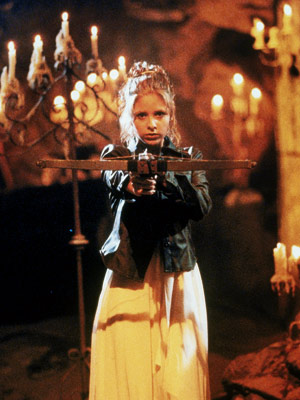
Fig.2: Don’t let the dress fool you; this chick can take–and dish out–a beating
Jesse Custer deals with the conflict between modern-day gender equality and old-fashioned chivalry in the pages of the landmark DC Vertigo comic Preacher, which ran from 1995-2000. A profane and violent blasphemy that primarily focuses on religion, good and evil, Preacher spends a lot of time juxtaposing modern feminism against old-style cowboy “women and children first” ethics. After Jesse’s girlfriend, the tomboy-turned-hitman Tulip O’Hare, is killed and resurrected by God himself, Jesse insists on leaving her behind every time they head into a firefight. While she’s proven in several fights that she can handle herself, he’s conflicted by his desire to protect and keep the woman he loves out of trouble (click the photo to see a full-size version of the page):


More recently, the gender divide with regard to fighting and violence was blurred, if not completely disregarded, in Battlestar Galactica, a TV series full of strong, independent women and men serving together in a military with no biases based on gender or sexual orientation (one of the fleet’s admirals was an out lesbian). In perhaps no other episode was the lack of a gender divide more on display than “Unfinished Business,” in which a shipwide boxing exhibition takes place, with the girls and guys fighting each other in the same ring. Kara “Starbuck” Thrace (the female reimagining of the original series’ brash male playboy) cleans the clock of fellow pilot Brendan “Hot Dog” Costanza before setting her sights on Lee “Apollo” Adama, with whom she has shared a messy and complicated love/hate relationship. The two soldiers get in the boxing ring and proceed to beat the holy hell out of each other, and for those invested in the characters, it’s painful to watch (Embedding is disabled on YouTube’s clips from the show—boo! Watch this and this to see what I’m talking about, if you’re not averse to spoilers).
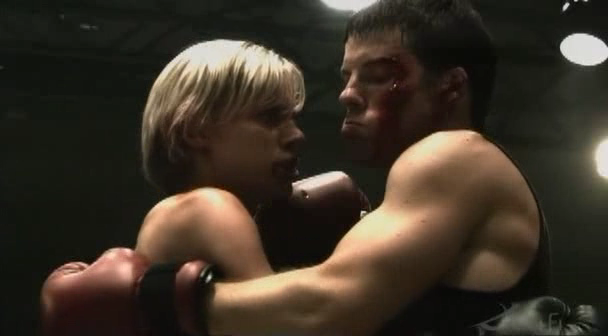
Fig.3: They beat because they love. Um…awww?
The fight’s gruesome and still disturbs me on some level—not because a guy was hitting a woman and vice versa, but because two characters who couldn’t deal with their feelings for each other were using violence as a metaphor for the mental abuse they’d heaped on each other up to that point. But if there’s a compelling reason here for Jon Anne to not worry about the death of old-style chivalry, it’s that the violence itself is what’s really disturbing—not necessarily the gender of the perpetrators. Were this a gay or lesbian couple duking it out, it would still be equally sad.
Jon Anne asks “what will hold the world together” if chivalry is dead and the boys don’t open doors for their sweethearts anymore (do the gay dudes just take turns? How about the lesbians? Man, chivalry is tricky!). Let’s not lie to ourselves—the power dynamics behind domestic violence, rape, and many other horrors tend to still favor the men. All things aren’t completely equal just yet. As our cosmopolitan editor Amy Elliott pointed out in Jon Anne’s comments section, “strict ideas about women and men haven’t stopped soldiers from raping civilians, husbands from beating wives, mothers from castrating their daughters or traffickers from selling children and teenage girls into sexual slavery,” and our culture’s re-evaluation of gender roles hasn’t stopped it yet, either. We’ve got a long way to go.