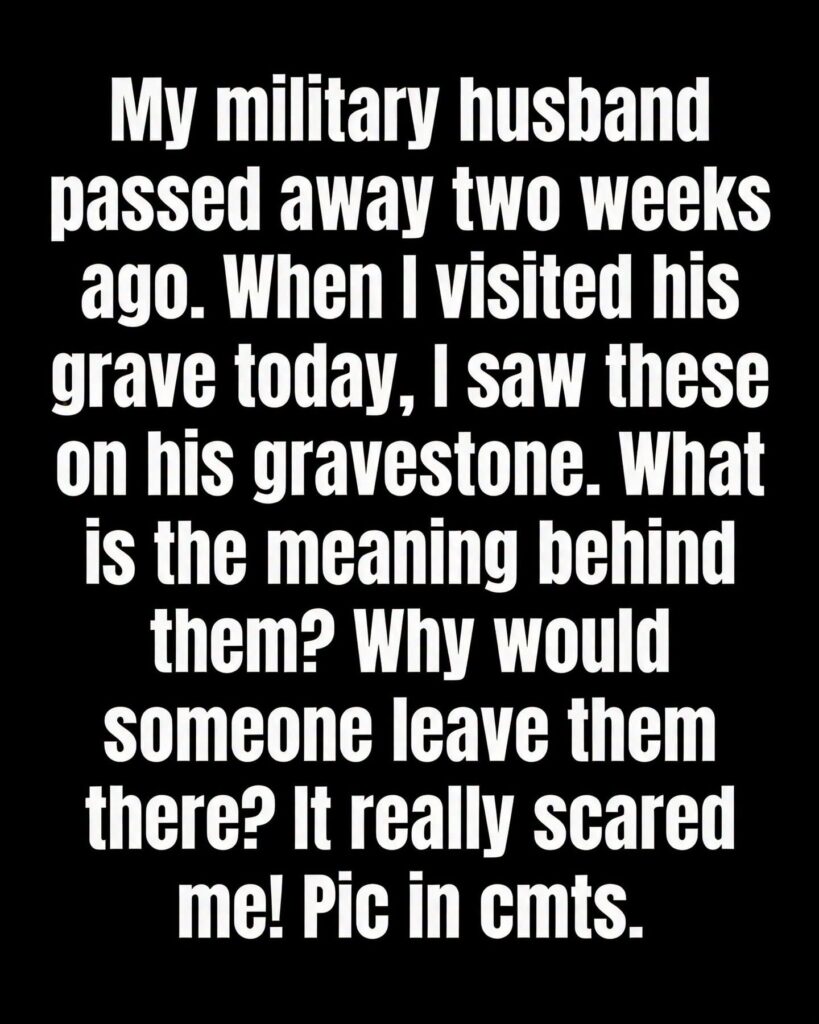
Sometimes, the smallest gestures carry thedeepest meanings. A coin resting on a militarygravestone may appear to be nothing more than aforgotten piece of change, but for those familiarwith the tradition, it represents something muchmore meaningful. It is a quiet expression ofrespect, remembrance, and gratitude towardsomeone who devoted their life to serving theircountry.
For families visiting the graves of loved ones,discovering these coins can be an emotionalexperience. Each one serves as a reminder thatthe person buried beneath the stone has not beenforgotten. Even years after their passing, formerfriends, fellow service members, and strangerscontinue to visit, acknowledge their sacrifice, andhonor their memory.
The tradition is especially meaningful because itallows visitors to communicate without leaving alengthy message or disturbing the peacefulsurroundings of a cemetery. A simple coin canrepresent a personal connection, a sharedexperience, or a promise that someone’s serviceand sacrifice will always be remembered.
What a Penny Represents
A penny is generally understood as the simplestmessage in this tradition.
It represents someone who visited the grave,noticed the name engraved on the headstone,and wanted to show that the fallen servicemember had not been forgotten.
The message is straightforward: I was here, Iremembered you, and I took a moment to honoryour life.
Sometimes, the visitor may have never met theperson buried there. They may simply besomeone who recognizes the sacrifices made bymembers of the armed forces and wishes toexpress appreciation.
For the family, finding a penny can be a small butmeaningful reminder that their loved one’smemory continues to reach people beyond theirimmediate circle.
Although the coin has little monetary value, thegesture can carry considerable emotionalsignificance.
The Meaning of a Nickel
A nickel traditionally represents a connectionbetween people who shared military service.
It may symbolize the friendship and experiencesformed during basic training, militaryassignments, and the many challenges associatedwith serving together.
Military friendships are often built throughsituations that are difficult for outsiders tounderstand. Service members may shareexhausting training exercises, demandingresponsibilities, moments of uncertainty, andexperiences that remain part of their lives longafter their service ends.
A nickel can therefore represent a special kind ofremembrance.
Its message is often interpreted as: We servedtogether. We experienced those difficult momentstogether. You were part of my life, and I have notforgotten you.
For surviving military friends, leaving a nickel canbe a personal way to acknowledge a relationshipthat remained important throughout their lives.
It also reminds families that their loved one wasnot defined only by their military rank or position.They were a friend, a companion, and someonewho formed meaningful relationships with others.
What a Dime Symbolizes
A dime is traditionally associated with a closerconnection between service members,particularly those who served together duringdeployment.
It can represent individuals who shared difficultassignments, dangerous circumstances, andexperiences that were not easily discussed withpeople outside the military.
Deployment can create powerful relationshipsbecause service members often depend on oneanother for support, encouragement, and safety.
They may experience long periods away fromtheir families, face uncertain circumstances, anddevelop friendships that remain meaningful fordecades.
When someone leaves a dime on a fallen servicemember’s grave, the gesture may symbolize thatshared journey.
Its message can be understood as: I rememberwhat we went through together. I remember thechallenges we faced. I will always carry thosememories with me.
For families who discover such a coin, it can offera glimpse into the relationships their loved oneformed while serving.
There may have been people who sharedimportant moments with them that the familynever had the opportunity to hear about.
The dime becomes a reminder that their lovedone’s story extended far beyond home.
The Deeper Meaning of aQuarter
The quarter is often described as carrying themost emotional meaning within this tradition.
According to the commonly shared interpretation,it represents someone who was present when theservice member died.
This may include a fellow soldier who witnessedtheir final moments or someone who experiencedthe same tragic event.
The coin can symbolize a painful but meaningfulmessage: I was there. Your loved one did not facethose final moments alone.
For families who have lost someone in militaryservice, this interpretation can be particularlymoving.
The thought that another person remembersthose final moments, carries those memories, andstill takes the time to visit the grave can provide asense of connection that words sometimescannot express.
However, it is important to understand that thesecoin meanings are widely shared traditionalinterpretations rather than a universally enforcedmilitary code. Not every visitor follows the samesystem, and the meaning of a particular coin maydepend on the individual who left it.
Regardless of the denomination, the gesture itselfremains an expression of remembrance.
Why Families Find Coins onMilitary Graves SoMeaningful
Losing someone who served in the military canleave families with questions and emotions thatremain long after the funeral.
Parents may wonder about the experiences theirchildren had while serving. Spouses mayremember the conversations, plans, and dreamsthey shared. Children may grow up learning abouta parent through photographs, stories, andmemories preserved by relatives.
Visiting a military cemetery can bring thosefeelings back.
The headstone provides a physical place wherefamilies can reflect, remember, and feelconnected to someone they miss.
Finding a coin there can create an unexpectedemotional moment.
It tells families that someone else took the time tovisit.
Perhaps it was an old military friend. Perhaps itwas someone who served in the same unit. Orperhaps it was a stranger who simply wanted torecognize the sacrifice represented by that grave.
Whatever the reason, the small object cancommunicate something important.
Their loved one mattered.
Their service mattered.
And their memory continues to live in the heartsof others.
A Tradition Rooted inRemembrance and Respect
The practice of leaving coins on gravestones isparticularly associated with military cemeteries inthe United States.
It has become a recognizable gesture of respectamong some visitors, especially those who wishto honor fallen service members without leavingflowers or written messages.
Coins are practical because they are small,durable, and easy to leave discreetly.
Unlike flowers, they do not require maintenance,and they can remain visible for a period of timebefore cemetery staff collect or remove them.
The tradition also reflects a broader human desireto create meaningful ways of rememberingpeople who have passed away.
Across different cultures, visitors have developedcustoms involving flowers, candles, photographs,stones, and other objects placed at gravesites.
Each gesture provides a way of expressingemotions that can sometimes be difficult to putinto words.
Coins offer another form of communication.
They are ordinary objects that becomemeaningful because of the intention behind them.
Why Even a Stranger MightLeave a Coin
Not every visitor who leaves a coin personallyknew the person buried beneath the headstone.
Some visitors walk through military cemeteries tohonor veterans and fallen service members as agroup.
Others may have served in the armed forcesthemselves and feel a connection to everyonewho made similar sacrifices.
There are also people who visit military gravesbecause they believe remembering the fallen is aresponsibility shared by society.
For them, leaving a coin is a simple way toacknowledge someone whose life contributed tosomething larger than themselves.
The gesture does not require a personalrelationship.
It only requires a willingness to pause, recognizethe name on the gravestone, and show respect.
This is one reason the tradition can be someaningful.
It demonstrates that remembrance does notalways depend on having known someonepersonally.
Sometimes, respect is enough.
The Importance of PreservingMilitary Memories
Military cemeteries contain more than names,dates, and engraved symbols.
Each grave represents an individual with apersonal history.
Behind every headstone was someone who hadfamily members, friendships, interests, ambitions,and plans for the future.
Some left behind spouses and children. Otherswere young adults whose lives ended before theyhad the opportunity to experience many of themilestones people take for granted.
Remembering their individual stories helpsprevent them from becoming simply anothername in a long row of graves.
Family members often preserve these memoriesthrough photographs, letters, military records, andconversations with people who knew thedeceased.
Former service members can also play animportant role by sharing stories about theirexperiences and the friends they lost.
These accounts provide future generations with abetter understanding of the people behind militaryhistory.
A coin placed on a gravestone may be a smallgesture, but it can encourage someone to stopand think about the individual whose nameappears on the stone.
That moment of reflection is part of what makesthe tradition meaningful.
A Small Gesture That CanCarry a Lifetime of Memories
The tradition of leaving coins on militarygravestones demonstrates how somethingordinary can become deeply significant.
A penny can represent a visit and a simpleexpression of remembrance. A nickel cansymbolize friendship between fellow servicemembers. A dime can reflect shared experiencesduring deployment. And a quarter is oftenassociated with someone who witnessed a fellowservice member’s final moments.
Although these interpretations are not universalrules, they have become a meaningful part of howsome people express respect for fallen militarypersonnel.
For grieving families, discovering a coin can be aquiet reminder that their loved one’s life touchedothers.
It may represent a friendship that survived thepassing of years, a memory that someonecontinues to carry, or a simple act of gratitudefrom a person who never wanted the sacrifice tobe forgotten.
Ultimately, the value of the coin has very little todo with money.
Its importance comes from the person who left itand the meaning behind the gesture.
Because sometimes, remembering someonedoesn’t require a speech, a ceremony, or anelaborate tribute. Sometimes, all it takes is a smallcoin resting on a gravestone to remind a grievingfamily that their loved one is still remembered.