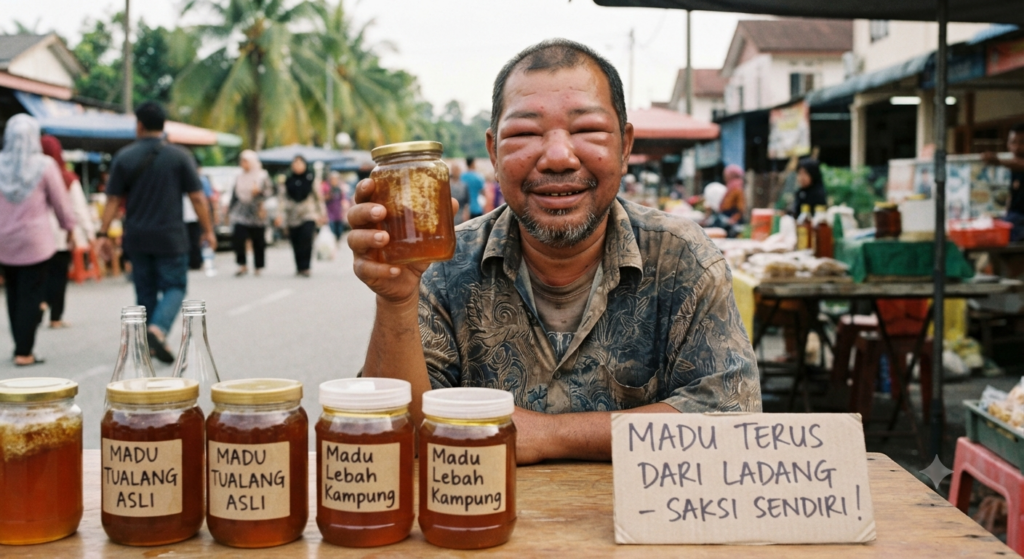
An archival photograph allegedly originating in Malaysia features a vendor standing near a transport vehicle, clutching a jar of honey while bearing severe facial swelling consistent with numerous bee stings.
Although official details regarding the incident remain scarce, the image instantly gained viral traction for its inherent irony. A beekeeper arriving to sell his product looking like he lost a physical altercation with an entire hive offers a bizarrely effective visual guarantee of authenticity, especially within a market plagued by widespread product adulteration.
The widespread amusement surrounding the image underscores a serious consumer protection issue within the region’s agricultural sector. Industry bodies have frequently warned that a significant portion of commercial honey products rely on diluted sugar syrups rather than genuine hive harvests, complicating matters for ethical local producers trying to prove the purity of their stock.
While this particular vendor’s aggressive marketing strategy is surely not recommended for safety reasons, it effectively communicates the unvarnished origin of his goods without needing a single label.
Authenticating pure honey involves much more than relying on humorous visual marketing or rustic packaging. Consumers frequently test products at home using simple methods, such as observing whether a drop dissolves immediately in water or holds its shape, though laboratory analysis like carbon isotope ratio mass spectrometry remains the only foolproof method to detect corn syrup or cane sugar adulteration.
Genuine raw honey naturally crystallizes over time due to its low moisture and high glucose content, whereas adulterated syrups stay liquid indefinitely. Supporting local apiaries that permit farm visits or transparent harvesting practices ensures buyers receive actual bee-made nectar loaded with natural enzymes, antioxidants, and pollen, rather than artificially flavored glucose water disguised as nature’s gold.