How One Small Detail Can Influence Relationships Between Neighbors
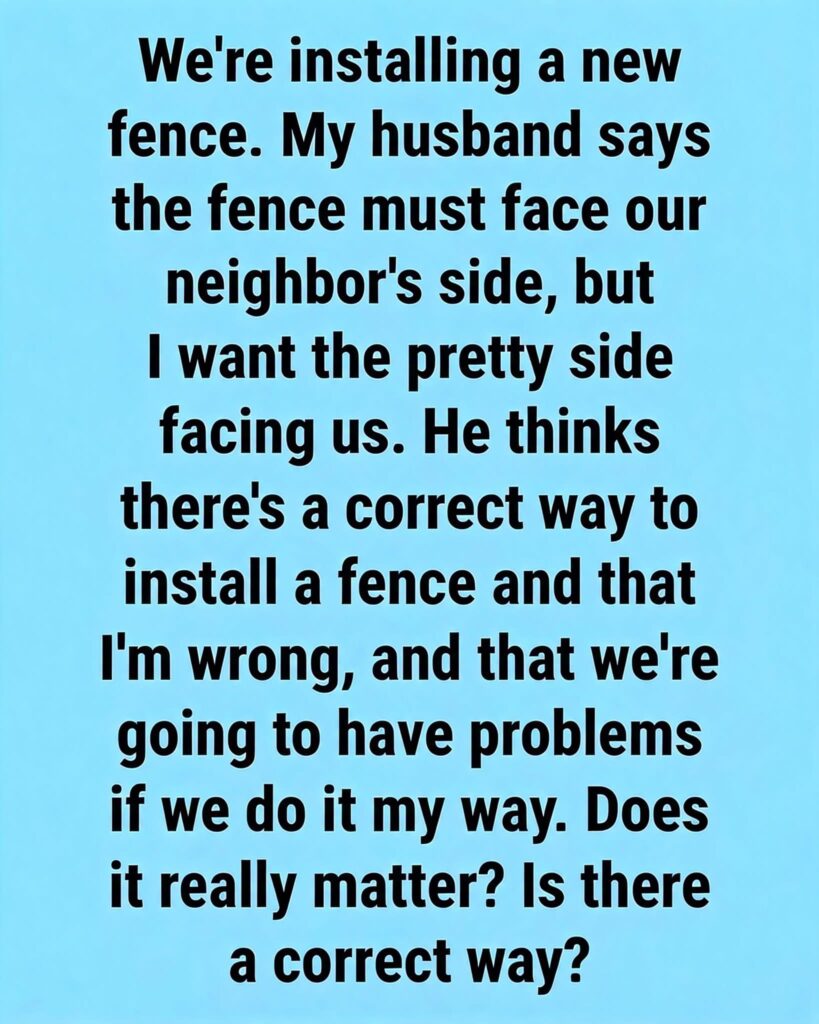
Disagreements over fences between neighborscan sometimes begin before construction evengets underway. One frequently debated issue isdeciding which side of a newly installed fenceshould face each property. More specifically,homeowners often disagree over who shouldreceive the smoother, more attractive finishedside. Although this may appear to be aninsignificant detail, it can quickly lead tofrustration, misunderstandings, and even long-lasting tension between people living next door toeach other. Fences serve several important functions arounda property. They can provide privacy, improvesecurity, mark property boundaries, andcontribute to the overall appearance of a home.However, the way a fence is designed andinstalled can influence how both homeowners feelabout the finished result. In most traditional fence designs, one side has asmoother and more polished appearance, whilethe opposite side reveals the supporting posts,horizontal rails, and other structural components.This difference can make one side lookconsiderably more appealing than the other. Many homeowners prefer positioning the finishedside toward the street or their neighbor’s propertybecause it creates a cleaner and more attractiveappearance. In certain neighborhoods, thisarrangement is viewed as a customary gesture ofpoliteness and consideration. However, othersargue that whoever purchases and pays for theinstallation should have the final say regarding thefence’s direction. The disagreement becomes more complicatedwhen neighboring homeowners have differentexpectations. One person might believe thatdirecting the finished side outward is simply thecourteous thing to do, while the other may haveconcerns about privacy, property value, upkeepresponsibilities, or how the fence will look frominside their own yard. Local building regulations and homeownersassociations can also play an important role indetermining how a fence should be installed.Some communities establish specific guidelinescovering fence height, approved materials,placement, and even which direction the finishedside must face. Overlooking these requirementscould lead to complaints, unexpected expenses,or demands to change a fence after constructionhas already been completed. Before purchasing supplies or arranging forprofessional installation, homeowners should takethe time to confirm their property boundaries.Examining existing property surveys andreviewing local construction requirements canhelp prevent disagreements involvingencroachment, shared boundaries, andunauthorized installations. Good communication is just as important asproper planning. Speaking with neighbors aboutproposed fence installations beforehand giveseveryone an opportunity to express theirconcerns, discuss individual preferences, andfind a mutually acceptable arrangement beforetensions develop. Sometimes, a straightforwardconversation can prevent misunderstandings thatmight otherwise become expensive andunpleasant disputes. Ultimately, deciding which neighbor shouldreceive the finished side of a fence should involveconsideration, fairness, and practical judgmentrather than assumptions or personaldisagreements. Taking time to plan theinstallation, respecting property rights, andmaintaining open communication can transform apotentially divisive project into a worthwhileimprovement that benefits everyone involved. Why Discussing Fence PlansBefore Construction Matters A fence may appear to be a simple addition to aproperty, but its installation can affect therelationship between neighbors for years. Whatbegins as a disagreement about appearance cangradually develop into a larger dispute involvingproperty boundaries, construction expenses,privacy, and personal expectations. One homeowner might believe the arrangement isperfectly reasonable, while the person living nextdoor may feel that their concerns were ignored.When neither side is willing to discuss the issuecalmly, even a relatively small disagreement canbecome unnecessarily complicated. This is why discussing expectations beforeconstruction begins is often the most practicalapproach. Homeowners can start by discussing theproposed design, the materials being considered,the location of the fence, and the direction inwhich the finished side will face. If both partieshave preferences, comparing the availableoptions beforehand may help them reach anarrangement that feels fair. It is also worth remembering that not every fencedesign has the same appearance on both sides.Some modern fencing styles are manufacturedwith a finished appearance on both sides, whichmay eliminate the disagreement altogether.Although these options can sometimes cost more,they may provide a practical alternative whenneighboring homeowners cannot agree on atraditional design. Another important consideration is maintenance.Different fencing materials require different levelsof care, and homeowners should understand whowill be responsible for maintaining the structure.This is particularly important when a fence ispositioned along or near a shared propertyboundary. Property ownership should never be assumedsimply because a fence separates two yards.Homeowners should confirm where their propertylines are located and understand the applicablelocal requirements before making decisions aboutconstruction or shared expenses. In some circumstances, speaking with a fencingcontractor or local building official can help clarifyinstallation requirements and identify potentialproblems before work begins. Ultimately, a fence should provide privacy andimprove a property’s appearance without creatingunnecessary hostility between the people livingnearby. A little consideration before constructioncan make a considerable difference afterward. Sometimes, the most important part of building afence isn’t deciding how it should look, butmaking sure the people on both sides can livecomfortably with the decision.