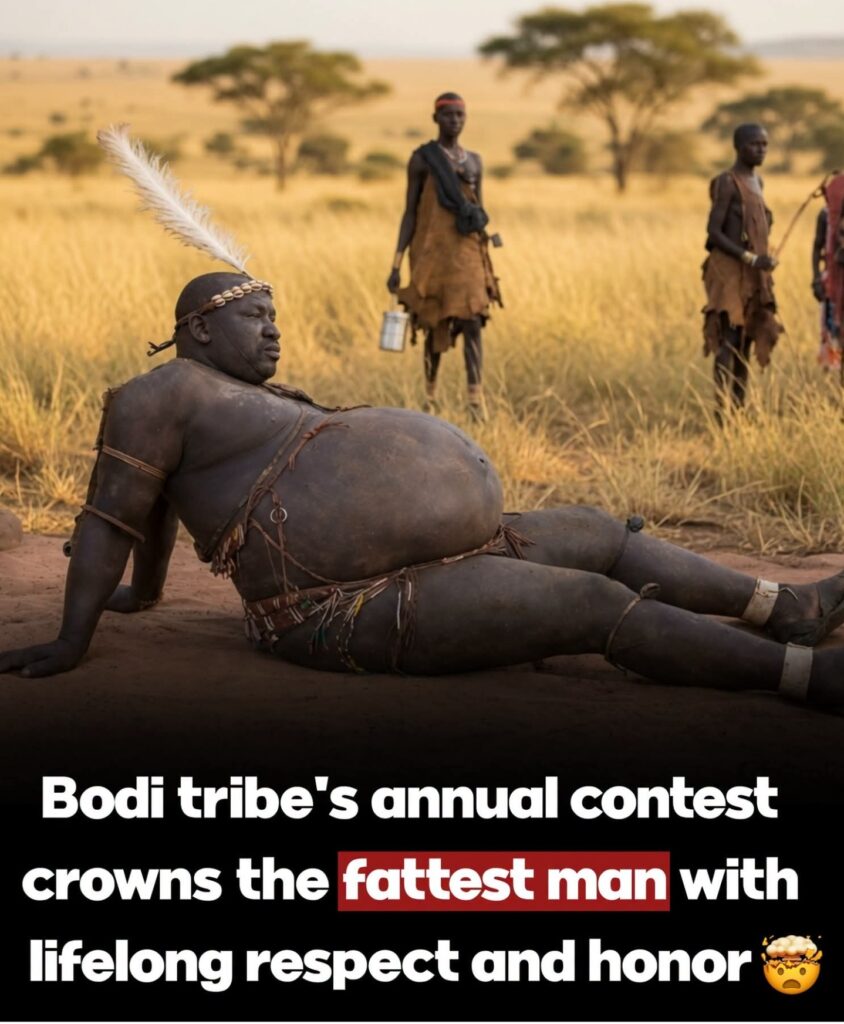
In Ethiopia’s remote Omo Valley, the Bodi people hold an unusual annual ceremony known as Ka’el, marking the tribal New Year. 🇪🇹
As part of the tradition, men from different clans participate in a competition based on body size. Months before the ceremony, selected unmarried men prepare by spending much of their time resting and consuming a traditional diet that includes large amounts of fresh milk and cow’s blood.
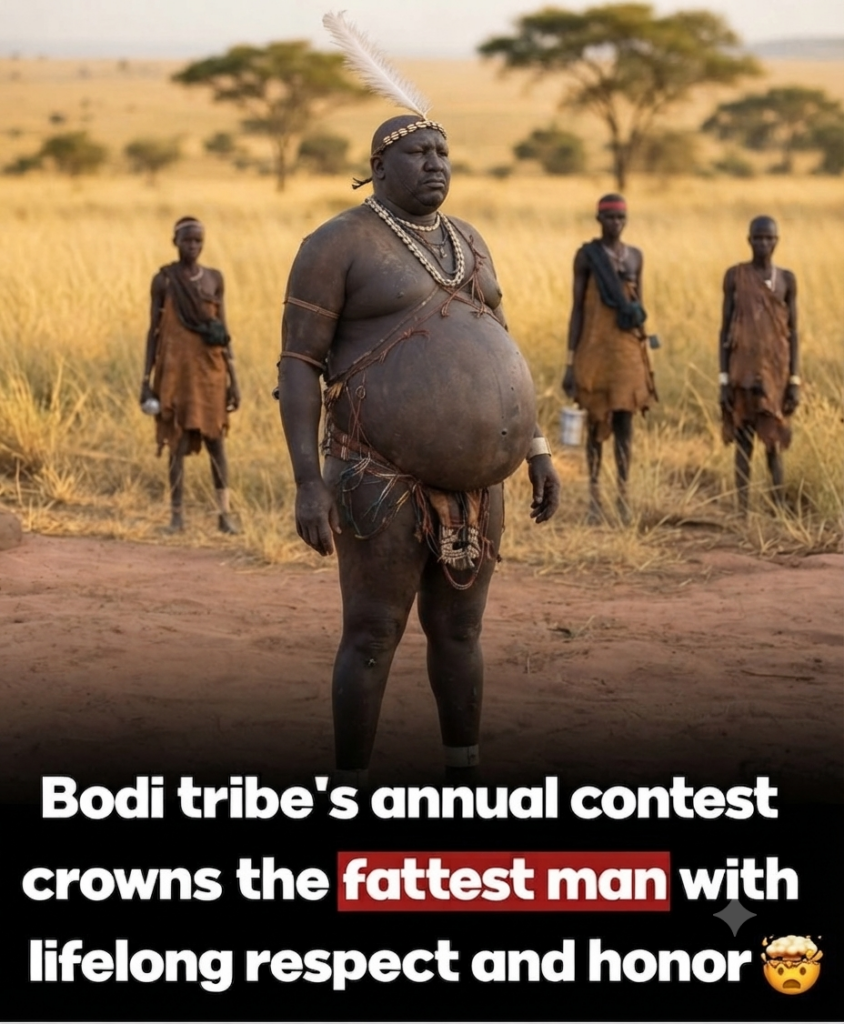
The preparation is closely connected to Bodi cultural traditions and is supported by members of the community. The cattle involved are considered valuable, and the blood is collected without killing the animals.
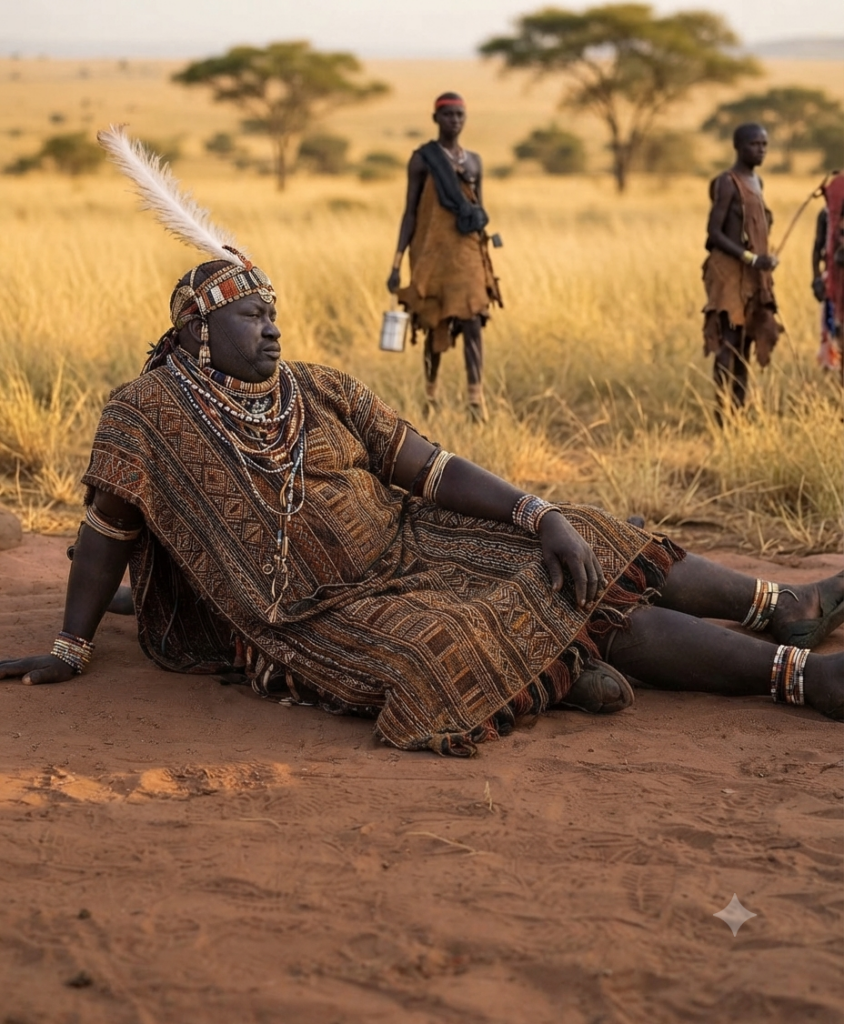
After months of preparation, the competitors emerge for the Ka’el ceremony, traditionally covered in clay and ash and wearing cultural decorations. They then take part in a ceremonial walk around a sacred tree while members of the community gather to watch. 🌳
The event has cultural significance beyond the competition itself. Traditionally, the ceremony provides an opportunity for unmarried men to gain recognition within the community, while families and potential partners also take part in the gathering.
The winner receives no conventional trophy or financial reward. Instead, winning brings considerable recognition and respect within the Bodi community.
While the tradition may seem unusual from an outside perspective, Ka’el reflects how different cultures develop ceremonies around identity, community, status, and important milestones.