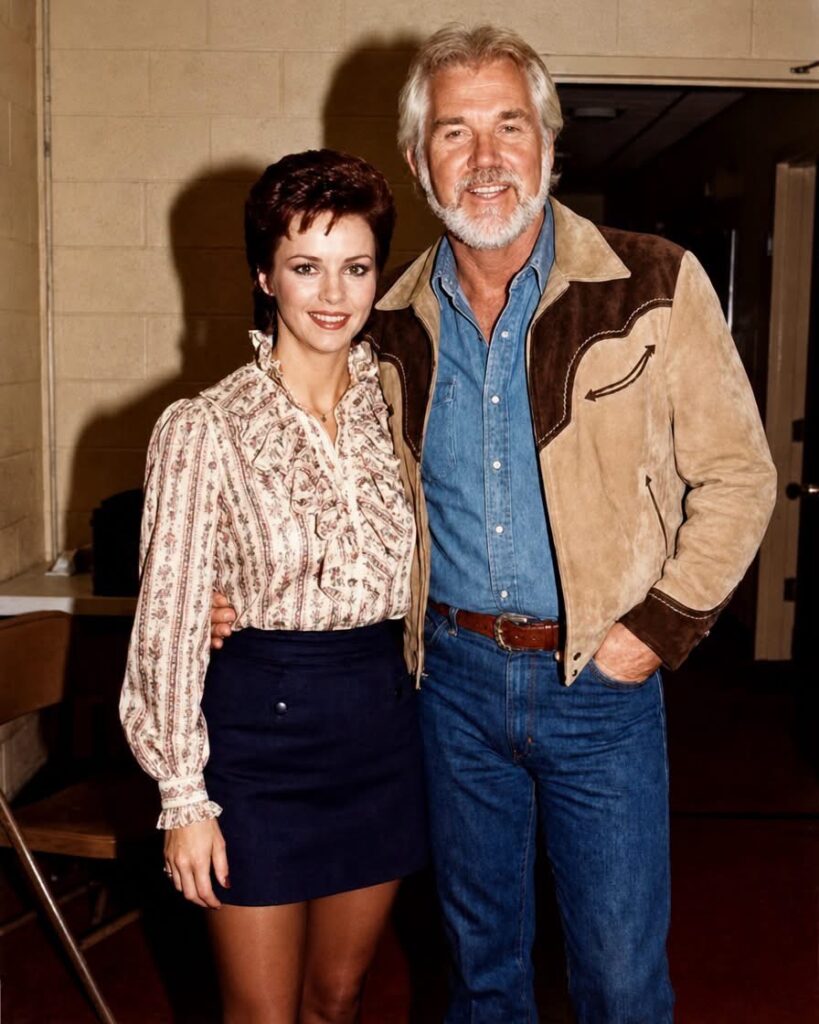
Some photographs capture much more than a simple moment in time. They preserve the people, relationships, and memorable experiences that help define an important period in entertainment history. A 1983 photograph featuring Scottish singer Sheena Easton alongside country music legend Kenny Rogers and his then-wife Marianne Gordon offers a glimpse into an era when music brought together performers from different backgrounds.
For longtime music enthusiasts, the image recalls an exciting period in the careers of three recognizable entertainment personalities. Easton was enjoying considerable international success, Rogers had already established himself as one of country music’s most popular performers, and Gordon was known for her connection to the entertainment industry and her marriage to the celebrated singer.
The photograph also brings attention to the musical connection between Easton and Rogers, particularly their memorable duet, “We’ve Got Tonight.” Their collaboration demonstrated how artists from different musical traditions could create something special together.
Sheena Easton’s Journey From Scotland to International Recognition
Sheena Easton’s rise to fame is an interesting example of how determination and opportunity can combine to create a successful entertainment career.
Born in Bellshill, Scotland, Easton developed an interest in music at an early age. Like many aspiring performers, she had ambitions that extended beyond her hometown. She eventually gained national attention through the BBC television program The Big Time, a documentary series that followed people attempting to achieve their professional dreams.
Easton’s appearance on the program introduced her voice and personality to a much wider audience. Viewers had an opportunity to follow her development as an aspiring recording artist, making her journey particularly interesting to television audiences.
The exposure proved valuable. Her television appearance helped open doors in the music industry, leading to a recording career that would soon reach audiences around the world.
Unlike artists who become famous through a single musical style, Easton demonstrated an ability to adapt to different sounds and performance opportunities. Her clear vocals, confident stage presence, and approachable personality helped distinguish her from other emerging singers.
The Songs That Made Sheena Easton a Household Name
The early 1980s became an especially important period for Easton. She began building a strong international following with popular recordings that received considerable attention on radio and television.
Among her recognizable early hits were “Modern Girl” and “Morning Train (Nine to Five).” Both songs helped establish her as an exciting new voice in pop music.
“Modern Girl” introduced listeners to her lively musical personality, while “Morning Train (Nine to Five)” became one of the defining recordings of her early career. Its memorable melody and accessible storytelling helped the song connect with a broad audience.
The success of these recordings demonstrated that Easton could appeal to listeners beyond the United Kingdom. Her music reached audiences in North America and other international markets, allowing her popularity to grow rapidly.
Her success was not simply the result of catchy songs. Easton also possessed the ability to communicate emotion through her performances. She could deliver energetic pop recordings while maintaining a vocal style that suited more reflective material.
This versatility would become increasingly important as her career developed.
A Major Career Milestone With the James Bond Theme
One of the most recognizable achievements in Easton’s career came when she recorded “For Your Eyes Only,” the theme song for the James Bond movie of the same name.
The 1981 film introduced audiences to her performance during its opening title sequence, giving her music an international platform.
The James Bond franchise has a long tradition of featuring memorable theme songs performed by prominent recording artists. Becoming part of that tradition represented a significant achievement for Easton.
The song suited her vocal abilities particularly well. Its dramatic melody and romantic atmosphere allowed her to demonstrate a more sophisticated side of her musical personality.
“For Your Eyes Only” also helped strengthen her position in the international entertainment industry. The recording received widespread recognition and became one of the most memorable musical contributions associated with the film series.
For many listeners, the song remains closely connected to the atmosphere of early-1980s cinema.
It also demonstrated that Easton could successfully move beyond conventional pop recordings and take on projects requiring a different emotional approach.
Kenny Rogers: A Country Music Legend
By the time Sheena Easton was becoming an international pop sensation, Kenny Rogers had already established an impressive career in American music.
Born in Houston, Texas, Rogers became one of the most recognizable voices in country and popular music. His distinctive singing style, warm delivery, and ability to communicate emotion helped him build a devoted international audience.
Throughout his career, Rogers recorded numerous successful songs, including “The Gambler,” “Lucille,” and “Lady.”
His music frequently explored themes of love, relationships, personal experiences, and the challenges of everyday life. These subjects helped make his recordings accessible to listeners from different generations.
Rogers was also known for working with performers outside traditional country music. His collaborations demonstrated an interest in exploring different musical styles while maintaining the qualities that made his voice recognizable.
His willingness to work across genres made him an ideal partner for artists such as Sheena Easton.
By the early 1980s, Rogers was already a major entertainment figure, and his continued success helped make his musical collaborations particularly noteworthy.
The Memorable Collaboration: “We’ve Got Tonight”
One of the most celebrated connections between Sheena Easton and Kenny Rogers came through their recording of “We’ve Got Tonight.”
Originally written and recorded by Bob Seger, the song received a new interpretation when Rogers and Easton joined their voices for the duet.
Their version brought together two different musical backgrounds. Rogers approached the recording with the familiar warmth associated with his country and adult contemporary performances, while Easton contributed a softer pop vocal style.
The combination created an emotional interpretation that appealed to audiences across multiple musical categories.
Rather than depending on an elaborate musical presentation, the duet allowed the singers’ voices to remain at the center of the recording.
Their performances complemented one another, creating a natural conversational quality that suited the song’s romantic theme.
For Easton, the collaboration offered an opportunity to reach listeners who primarily followed country music. For Rogers, it continued his tradition of working with talented performers whose musical backgrounds differed from his own.
The recording became an important part of both artists’ musical histories and remains one of the collaborations associated with the early 1980s.
Marianne Gordon and Her Connection to Kenny Rogers
The presence of Marianne Gordon in the 1983 photograph adds another interesting dimension to the image.
Gordon was an actress who appeared in television and film productions. She also became widely recognized through her marriage to Kenny Rogers.
The couple married in 1977, during a period when Rogers was enjoying growing success as a recording artist and entertainer. Their marriage lasted until 1993.
Although Rogers frequently appeared in the public eye because of his music career, Gordon maintained her own identity and professional background.
Her appearance alongside Easton and Rogers in the photograph provides a reminder that entertainment history includes not only the performers whose voices reach audiences but also the people who share important moments in their personal and professional lives.
Photographs like this are particularly interesting because they capture relationships and encounters that might otherwise be remembered only through interviews, recordings, and written accounts.
They also provide a visual connection to a period when music, television, and celebrity culture were developing rapidly.
Why the Year 1983 Was an Interesting Period in Music
The early 1980s represented a particularly exciting chapter in popular entertainment.
Music videos were becoming increasingly influential, radio remained an important way for listeners to discover new recordings, and international collaborations were helping artists reach audiences they might not otherwise have encountered.
Pop music, country music, rock, and adult contemporary recordings frequently overlapped.
Artists were becoming more willing to experiment with different sounds and collaborate with performers from other musical traditions.
Sheena Easton and Kenny Rogers represented two different but complementary sides of this musical environment.
Easton had established herself through contemporary pop recordings and television exposure. Rogers had built a reputation through country music while also achieving considerable success in mainstream popular music.
Their partnership demonstrated that musical boundaries did not always need to separate artists or audiences.
A well-performed song could appeal to listeners regardless of the genre they usually preferred.
This willingness to explore different musical approaches helped make the period especially memorable.
Awards and Achievements That Defined Easton’s Career
Easton’s success continued beyond her early pop hits and celebrated collaboration with Rogers.
Throughout her career, she explored different musical styles and entertainment opportunities. Her accomplishments included winning two Grammy Awards and recording music that reached audiences in several countries.
She also demonstrated an ability to move between different areas of entertainment, including television appearances and stage performances.
Her career included both commercially successful recordings and projects that allowed her to demonstrate a broader range of musical abilities.
This adaptability became one of her defining characteristics.
Many performers become closely associated with one particular musical identity. Easton, however, demonstrated that a successful artist could explore different styles without losing the qualities that made her distinctive.
Her work across pop, adult contemporary, and other musical categories helped establish her as a versatile entertainer.
Why Photographs From This Era Still Interest Music Fans
Vintage entertainment photographs continue to attract attention because they offer a personal connection to important moments in popular culture.
For longtime fans, seeing familiar performers together can bring back memories of favorite songs, television appearances, concerts, and other experiences associated with a particular period.
For younger audiences, these images can provide an introduction to artists whose music helped shape earlier generations.
A photograph featuring Sheena Easton, Kenny Rogers, and Marianne Gordon is especially interesting because it brings together three recognizable entertainment personalities during a significant period in Easton’s career.
It also encourages people to revisit the music that connected these performers.
The popularity of nostalgic entertainment content demonstrates that interest in classic music extends beyond the original release dates of recordings. Great songs can continue finding new audiences long after their first appearance on radio or television.
A Musical Connection Worth Remembering
Sheena Easton’s journey from Bellshill, Scotland, to international recognition remains an inspiring story of talent, determination, and artistic flexibility.
Her early television exposure helped introduce her to audiences, while recordings such as “Modern Girl” and “Morning Train (Nine to Five)” established her as a successful pop performer.
Her contribution to the James Bond film For Your Eyes Only further strengthened her international reputation.
Meanwhile, her collaboration with Kenny Rogers on “We’ve Got Tonight” demonstrated how artists from different musical backgrounds could create a memorable recording together.
The 1983 photograph featuring Easton, Rogers, and Marianne Gordon provides a nostalgic reminder of this interesting period in entertainment history.
Although photographs capture only a single moment, they can encourage people to rediscover the music, personalities, and experiences connected to that time.
For fans of classic pop and country music, the connection between Easton and Rogers remains an enjoyable chapter worth revisiting.
Their musical partnership showed that talent and emotional expression can cross genre boundaries, creating recordings that continue to resonate with listeners years later.
Ultimately, the photograph is more than a glimpse of three familiar faces. It represents a memorable era in music when talented performers came together, explored new opportunities, and created experiences that audiences continue to appreciate today.