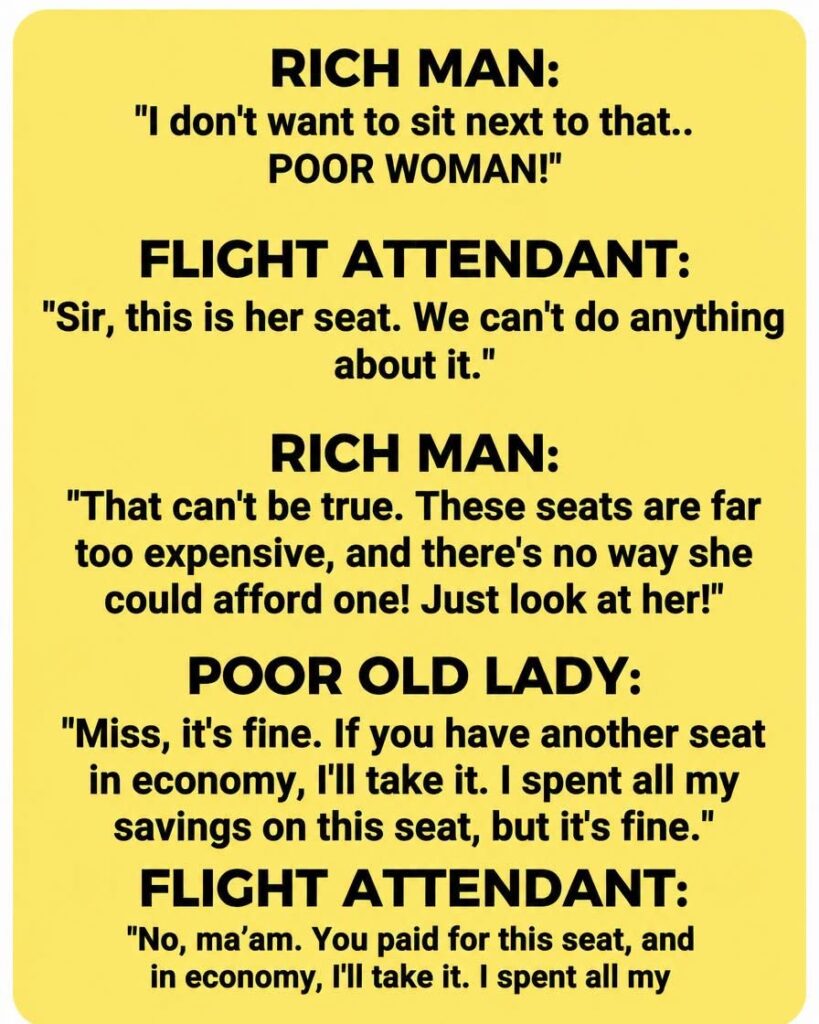
At eighty-five, Stella was about to experiencesomething she had dreamed of for most of herlife: her very first airplane journey.
She had spent years putting aside small amountsof money, carefully saving until she could finallyafford the trip. It wasn’t a luxurious vacation or anextravagant adventure. It was a personalmilestone she had postponed countless timeswhile taking care of family responsibilities andputting everyone else’s needs ahead of her own.
As she settled into her business-class seat, shefelt a mixture of excitement and nervousness. Herclothes were simple, her handbag was old, andher movements were slow, but she was proud ofhaving reached this moment.
Unfortunately, the passenger seated beside herhad a very different reaction.
Franklin Delaney was a wealthy businessmanaccustomed to comfort and special treatment.When he noticed Stella’s modest appearance, helooked visibly displeased.
He questioned why someone dressed like her wassitting in business class. His comments grewlouder, attracting the attention of nearbypassengers.
Stella tried to remain calm.
She explained that she had purchased her ticketand was simply looking forward to her journey.
But Franklin continued making remarks about herappearance and suggested that she would bemore comfortable in economy class.
Feeling embarrassed, Stella quietly turned towarda flight attendant.
“If moving would make things easier, I don’t mindchanging seats,” she offered.
The attendant responded kindly but firmly.
“There’s no need for you to move, ma’am. You’vepurchased this seat, and you’re entitled to enjoyyour journey just like everyone else.”
Stella nodded gratefully and settled back into herchair.
Franklin seemed ready to continue complaining,but then something unexpected happened.
He looked at Stella more carefully.
Her face seemed familiar.
He studied her expression, her eyes, and thegentle way she spoke. Suddenly, a memory fromdecades earlier began to return.
“Wait a moment,” he said, his voice noticeablyquieter. “Are you Stella?”
She turned toward him.
“Yes. Do we know each other?”
Franklin stared at her in disbelief.
He remembered her now.
Many years earlier, when he was a young manfacing difficult circumstances, Stella had made agenerous personal sacrifice that helped changethe direction of his life. Her kindness hadprovided an opportunity he might otherwise neverhave received.
That single act had played an important role in thepath that eventually led to his professionalsuccess.
Yet, over the years, Franklin had lost contact withher.
He had built a successful career, accumulatedwealth, and become accustomed to judgingpeople by appearances and social status.
Now, the elderly woman he had just insulted wasthe same person whose generosity had helpedhim when he had very little.
His expression changed completely.
“It’s really you,” he whispered.
Stella looked at him with growing curiosity.
Franklin struggled to find the right words. Herealized that he had spent several minutescriticizing someone without knowing anythingabout her story.
And even before recognizing her, he understoodthat his behavior had been wrong.
He lowered his head.
“I’m deeply sorry for the way I spoke to you. Ishould never have treated you like that.”
Stella listened quietly.
The flight attendant, who had witnessed theexchange, returned to check whether everythingwas all right.
Franklin then began explaining who Stella wasand why her presence meant so much to him.
As the aircraft prepared for departure, theatmosphere around their seats had changed.
The man who had initially complained aboutsharing space with an elderly woman nowunderstood how little he had known about theperson sitting beside him.
Stella, meanwhile, remained remarkablycomposed.
She hadn’t purchased her ticket to receive specialattention or recognition. She had simply wanted toexperience something she had dreamed about foryears.
As the plane began moving toward the runway,she looked through the window with a quiet smile.
For her, the journey was still about fulfilling alifelong dream.
For Franklin, it had become an unexpectedopportunity to reflect on his behavior, his past,and the importance of treating people withdignity.
He had finally recognized someone whosekindness had helped shape his life.
But the most important lesson was one he shouldhave understood long before that flight:
A person’s worth is never determined by theirclothes, wealth, age, or social position. Everyonedeserves respect, even when their story isunknown to us.