M&M’s are among the most recognizable chocolate candies in the world. Their colorful shells, small round shapes, and delicious chocolate centers have made them a favorite treat for generations. Whether you enjoy them by the handful, sprinkle them over ice cream, or share a bag during movie night, these little candies have become a familiar part of everyday life.
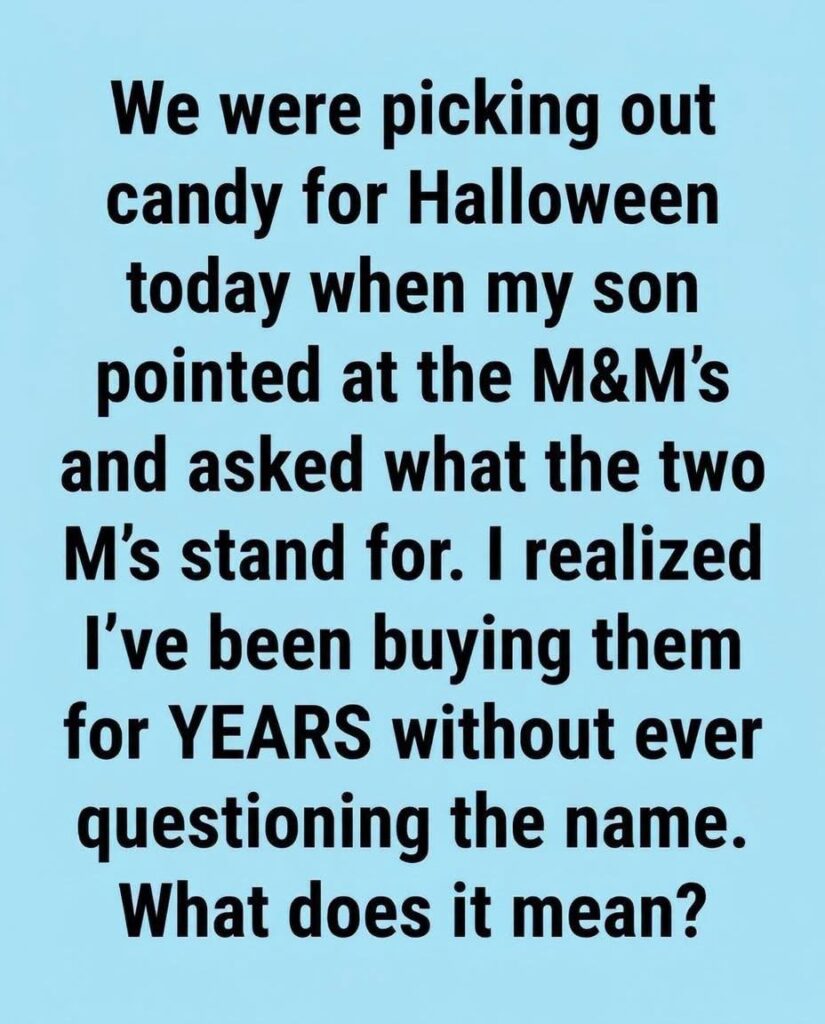
But have you ever stopped to wonder what the two letters in M&M’s actually mean?
Many people recognize the brand instantly without knowing anything about the story behind its name. Some might even assume the initials were chosen simply because they sounded catchy or were easy to remember.
The real explanation, however, is connected to two men whose partnership helped create one of the world’s best-known chocolate brands.
The letters M&M stand for Mars and Murrie, the surnames of Forrest Mars Sr. and Bruce Murrie. Their collaboration led to the introduction of the original M&M’s chocolate candies in 1941.
The story behind the name is only one interesting part of the brand’s history. From an idea inspired by chocolate-making techniques overseas to an unexpected connection with space exploration, M&M’s have a surprisingly fascinating background.
What Does M&M Actually Stand For?
The answer is simpler than many people expect.
M&M’s takes its name from the surnames of its two original business partners: Forrest Mars Sr. and Bruce Murrie.
Forrest Mars was connected to the Mars family, which had already established itself in the confectionery business. Bruce Murrie, meanwhile, was the son of William Murrie, a former president of the Hershey Chocolate Company.
The two men combined their business interests and experience to develop a chocolate candy with a protective outer coating.
Their surnames provided the inspiration for the brand name, creating the familiar initials that consumers still recognize today.
Although the name may look like a simple marketing choice, it represents an important business partnership that helped bring a new type of chocolate treat to the market.
How Did the Idea for M&M’s Begin?
The origins of M&M’s are often connected to Forrest Mars Sr.’s experiences in Europe during the 1930s.
At the time, chocolate manufacturers were exploring different ways to make their products easier to transport and store.
Chocolate has a natural tendency to soften or melt when exposed to heat. This creates challenges when products need to be carried over long distances, particularly in warm weather.
Forrest Mars reportedly became interested in small chocolate candies with protective sugar coatings after encountering similar products in Europe.
One candy often mentioned in accounts of M&M’s history is British Smarties, which featured chocolate centers covered by colorful candy shells.
The protective coating helped keep the chocolate contained, making the candies more convenient to handle and transport.
This idea inspired the development of a similar product for the American market.
Rather than simply copying an existing candy, Mars and Murrie worked toward creating their own version, combining chocolate with a durable outer shell.
The result was a small candy that offered a practical advantage while still delivering the familiar taste of chocolate.
Why Was the Candy Coated in a Hard Shell?
One of the defining features of M&M’s is the colorful outer coating surrounding the chocolate center.
Although the bright colors make the candies visually appealing, the coating also serves a practical purpose.
Chocolate can become soft when exposed to higher temperatures. A protective candy shell helps reduce direct contact with the chocolate and makes the product easier to handle.
This was particularly useful when manufacturers wanted to distribute chocolate products over long distances.
The idea was especially relevant during a period when transportation and storage conditions could make chocolate distribution challenging.
The coated design helped distinguish M&M’s from many traditional chocolate products.
It also gave the candies their familiar appearance: small, rounded pieces with a chocolate center and a colorful exterior.
The concept proved successful and became one of the most recognizable characteristics of the brand.
When Were M&M’s First Introduced?
M&M’s were first introduced in 1941.
Their arrival came at an interesting time in American history. The country was approaching its involvement in World War II, and practical food products were becoming increasingly important.
The candy’s durable coating made it suitable for transportation and storage, which helped create opportunities beyond ordinary retail sales.
During World War II, M&M’s were supplied to American military personnel. Their ability to withstand handling and transportation made them a practical chocolate option for soldiers.
The original product was different from the colorful candies most people recognize today.
Early M&M’s featured limited shell colors, with brown being particularly prominent. Over time, additional colors and product variations were introduced.
As the brand grew, its distinctive appearance became an important part of its identity.
Who Were Forrest Mars Sr. and Bruce Murrie?
Understanding the people behind the name makes the history of M&M’s even more interesting.
Forrest Mars Sr.
<text weight=”medium”>Forrest Edward Mars Sr.</text> was an American businessman and member of the Mars family, which became one of the most influential families in the global confectionery industry.
His father, Frank C. Mars, founded the business that eventually developed into Mars, Incorporated.
Forrest Mars became involved in the family business and later pursued opportunities to develop confectionery products in different markets.
He played an important role in the creation and expansion of several well-known candy brands.
His business ambitions and interest in confectionery innovation helped establish the foundation for M&M’s.
Bruce Murrie
<text weight=”medium”>Bruce Murrie</text> was the other important figure in the original partnership.
His father, William Murrie, was associated with the Hershey Chocolate Company and served as its president.
This connection was particularly useful because Hershey had considerable experience in chocolate manufacturing.
The partnership brought together Forrest Mars’s entrepreneurial interests and Murrie’s connection to the American chocolate industry.
Together, they helped turn the idea of a coated chocolate candy into a commercial product.
Why Did M&M’s Become So Popular?
M&M’s gradually developed into a major confectionery brand because of several important factors.
Its popularity was not based on appearance alone. The candy combined a familiar chocolate flavor with a practical design that made it convenient to carry, share, and enjoy.
Here are some of the reasons the brand became so successful.
1. A Convenient Size
The small size of M&M’s made them easy to eat individually or by the handful.
They could also be shared with friends and family without requiring special preparation.
Their compact shape made them suitable for many occasions, from road trips to celebrations.
2. A Distinctive Appearance
The colorful candy shells helped M&M’s stand out from other chocolate products.
The different colors also made the candies appealing for decorating desserts, adding to baked goods, and creating themed treats.
Over time, the colorful appearance became closely associated with the brand.
3. A Recognizable Name
The short name was easy to remember and became an important part of the product’s identity.
The connection to the two founders also gave the name a genuine historical story.
4. Creative Marketing
The brand became known for memorable advertising campaigns and recognizable characters.
These marketing efforts helped introduce M&M’s to new generations of consumers and strengthened its position in popular culture.
How Did M&M’s Reach Outer Space?
One of the most unusual chapters in the history of M&M’s involves space exploration.
In 1981, M&M’s were carried aboard NASA’s Space Shuttle Columbia during its first mission, STS-1.
This milestone helped establish the candies as one of the memorable snacks associated with space travel.
Food in space presents special challenges. Astronauts need products that can be stored, transported, and consumed in a limited environment.
Small candies are convenient because they do not require complicated preparation.
M&M’s also became an interesting example of how familiar everyday foods could accompany astronauts on extraordinary missions.
Their connection with space exploration added another memorable detail to the brand’s history.
It is a reminder that even an ordinary chocolate candy can become part of an unusual historical event.
How Has the M&M’s Brand Changed Over the Years?
Since its introduction in 1941, M&M’s has undergone many changes.
The original chocolate version remained central to the brand, but manufacturers eventually introduced additional varieties to appeal to different preferences.
These developments included different flavors, sizes, and ingredient combinations.
Peanut M&M’s became one of the best-known variations, offering a peanut center covered in chocolate and a colorful outer shell.
Other versions followed, including varieties featuring caramel, crispy centers, and different chocolate combinations.
The brand also expanded its marketing identity.
Its familiar candy characters became recognizable figures in advertising, giving the products personalities and helping create a stronger connection with consumers.
Today, M&M’s are sold in many countries and remain one of the most recognizable names in the confectionery market.
What Is the Connection Between M&M’s and Other Famous Candy Brands?
The story of M&M’s is also part of a much larger history involving the Mars family’s influence on the candy industry.
Frank C. Mars, Forrest Mars Sr.’s father, helped establish the business that eventually became Mars, Incorporated.
The company became associated with several familiar confectionery products over the years.
Among its best-known brands are:
- Milky Way: A chocolate bar introduced in the 1920s.
- Snickers: A popular chocolate bar featuring peanuts, caramel, and nougat.
- Mars Bar: A chocolate confectionery product that became popular in several international markets.
- M&M’s: The colorful chocolate candies developed through the partnership between Forrest Mars Sr. and Bruce Murrie.
These products illustrate how the Mars business developed from a family confectionery operation into a major international company.
The company also expanded beyond candy into other areas of food and pet care.
Its history demonstrates how a relatively small number of early business decisions helped shape a major global brand.
Why Do People Still Love M&M’s Today?
More than eight decades after their introduction, M&M’s remain familiar to chocolate lovers around the world.
Part of their appeal comes from their simplicity.
The combination of chocolate and a colorful candy shell is easy to recognize, and the small pieces make them convenient for sharing or enjoying as an occasional treat.
They are also used in a variety of desserts, including cookies, brownies, cupcakes, ice cream, and homemade snack mixes.
Their bright colors make them particularly popular for celebrations and themed decorations.
For many people, the candies also bring back memories of childhood, family gatherings, movie nights, and special occasions.
That connection between familiar flavors and personal memories helps explain why established confectionery brands can remain popular across generations.
Final Thoughts: Two Letters With a Sweet History
The next time you see a colorful bag of M&M’s, you might look at the familiar initials a little differently.
Those two letters are not random, nor do they stand for a catchy advertising phrase. They represent the surnames of Forrest Mars Sr. and Bruce Murrie, the two men whose partnership helped introduce the candy in 1941.
Their idea was inspired by the potential of a protective candy coating, which made chocolate easier to handle and transport.
What began as a practical confectionery innovation eventually developed into an internationally recognized brand.
From its early connection to military food supplies to its appearance aboard the Space Shuttle Columbia, M&M’s has accumulated an interesting history.
So, while the colorful candies may be best known for their familiar chocolate taste, their name tells a story about two businessmen, an innovative idea, and a partnership that helped change the confectionery industry.
Sometimes, even the simplest brand names have a surprisingly interesting story behind them.