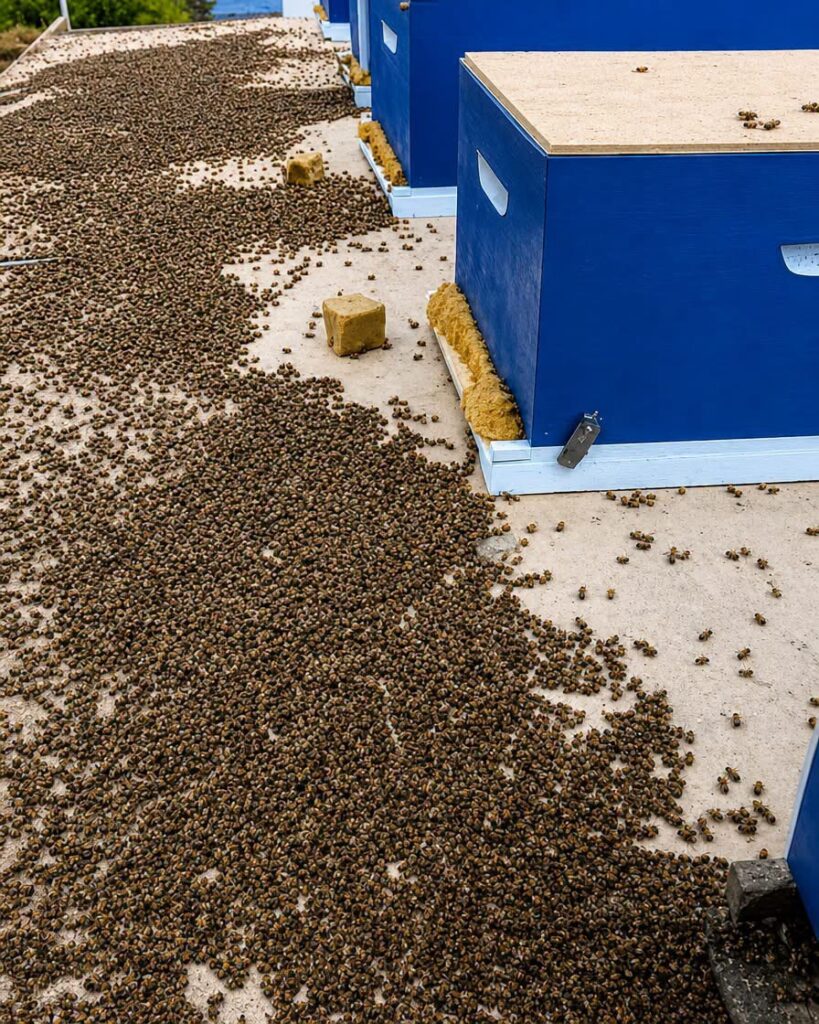
Bees are among the most important creatures in the natural world, yet their role in our everyday lives is often overlooked. When people think about bees, they may picture a honeybee moving from flower to flower or a beekeeper tending rows of hives. What is less obvious is just how closely bees are connected to healthy ecosystems, agriculture, biodiversity, and the food we eat every day.
Bees help countless flowering plants reproduce by transferring pollen between flowers. This simple process, known as pollination, allows many plants to produce fruits and seeds. In turn, those plants provide food and shelter for countless other species. This means that bees are not merely producers of honey. They are active participants in ecological systems that support both wildlife and human communities.
Unfortunately, bees face a growing number of challenges. Habitat destruction, pesticide exposure, climate-related changes, disease, parasites, and shortages of food can all place pressure on bee populations. Wild bees are particularly vulnerable when natural areas are replaced by roads, buildings, intensive farmland, or landscapes with very few flowering plants.
The good news is that protecting bees does not require every person to become a beekeeper. Individuals, farmers, communities, businesses, and governments can all take practical steps to create safer environments for pollinators. Understanding why bees matter is the first step toward making those changes.
The Essential Role of Bees in Pollination
Pollination is one of the most important services bees provide. When a bee visits a flower to collect nectar or pollen, pollen grains can attach to its body. As the bee travels to another flower, some of that pollen is transferred to the plant’s reproductive structures. This helps plants reproduce and, in many cases, leads to the production of fruits and seeds.
This process benefits both wild plants and agricultural crops. Many fruits, vegetables, nuts, and other foods depend to some degree on animal pollination. Even crops that do not require bees in exactly the same way can benefit from healthy pollinator populations.
The importance of pollination goes beyond the plants that humans eat directly. Flowering plants form the foundation of many food webs. Birds, insects, mammals, and other animals depend on plants for food or habitat. When pollination supports healthy plant communities, those benefits can spread throughout an ecosystem.
This is why a decline in pollinator populations can have consequences that are difficult to see immediately. A reduction in bees does not necessarily mean that crops will suddenly disappear. Instead, persistent losses can contribute to weaker plant reproduction, reduced biodiversity, and less resilient ecosystems over time.
Why Bee Populations Are Under Pressure
Bees face several overlapping threats, and there is no single explanation for every decline observed among bee species.
One major concern is the loss of habitat. Bees need places where they can find food and, depending on the species, suitable locations for nesting. Natural landscapes often contain a variety of flowering plants that bloom at different times of the year. When these areas are replaced with development or large expanses of vegetation that provide little food for pollinators, bees may struggle to find sufficient resources.
Agricultural practices can also influence bee health. Modern farming allows societies to produce large amounts of food, but intensive agricultural landscapes may offer fewer diverse sources of nectar and pollen. The timing and management of farming activities can also affect pollinators.
Pesticide exposure is another important concern. Pesticides are valuable tools for controlling agricultural pests, but some chemicals can harm bees when exposure occurs under certain conditions. The effects may depend on the substance, concentration, method of application, timing, and species involved.
Disease and parasites present additional challenges. Managed honeybee colonies, for example, can be affected by pests and pathogens that weaken colonies. Wild bees can face their own range of diseases and environmental pressures.
Climate change and changing weather patterns may add another layer of difficulty. Bees depend on seasonal relationships between themselves and flowering plants. If flowering occurs earlier or later than usual, or if extreme weather disrupts plant growth, bees may encounter periods when food is harder to find.
The Importance of Wild Bees
When discussing bees, it is easy to focus almost entirely on honeybees. Honeybees are familiar because they are managed by beekeepers and produce honey, but they are only one part of the much larger bee community.
There are thousands of bee species around the world, including many solitary species. These wild bees can play important roles in pollinating native plants and agricultural crops.
Different bee species also have different nesting requirements. Some build nests in the ground, while others use cavities, hollow stems, dead wood, or other natural structures. This means that protecting bees requires more than simply maintaining honeybee hives.
A landscape can contain healthy honeybee colonies while still providing poor conditions for wild pollinators. Effective conservation therefore needs to consider the broader ecosystem rather than concentrating on one species.
Protecting wild bees can involve preserving natural habitats, leaving some areas undisturbed, maintaining native flowering plants, and avoiding unnecessary destruction of potential nesting sites.
Creating Bee-Friendly Gardens
One of the simplest ways individuals can help pollinators is by creating spaces where bees can find food.
A garden does not have to be enormous to provide value. Even a small collection of flowering plants can offer nectar and pollen. Larger gardens can support a wider variety of species and provide resources across a longer portion of the growing season.
Native plants are often particularly valuable because local pollinators have evolved alongside regional plant communities. Choosing plants that flower at different times can also help ensure that food is available throughout the season.
Gardeners should also think beyond flowers. Bees need nesting areas and suitable environments in addition to food. Leaving some natural areas undisturbed can help provide nesting opportunities for certain species.
Reducing unnecessary pesticide use is another important step. If pest control is necessary, gardeners can consider approaches that minimize risks to pollinators and apply treatments carefully according to appropriate instructions.
A bee-friendly garden does not need to look perfectly manicured. In fact, allowing a little natural growth can sometimes provide more resources for wildlife.
What Farmers Can Do
Farmers have an especially important role because agricultural land occupies large areas in many regions. Even relatively small changes in farming practices can potentially create better conditions for pollinators.
Planting flowering cover crops, maintaining hedgerows, preserving field margins, and protecting nearby natural habitats can provide bees with additional food and nesting resources.
Farmers can also consider the timing and method of pesticide applications. Where pest management is necessary, careful application can reduce unnecessary exposure to pollinators. Integrated pest management approaches can help farmers balance crop protection with environmental considerations.
The goal is not to eliminate every form of pest control or make farming impossible. Rather, it is to find practical approaches that allow agricultural production and pollinator conservation to coexist.
Healthy pollinator populations can themselves be valuable to agriculture because many crops benefit from effective pollination. Protecting pollinators can therefore be viewed not simply as an environmental responsibility but as part of maintaining productive and resilient food systems.
The Role of Beekeepers
Responsible beekeeping can also contribute to pollinator awareness and conservation.
Beekeepers monitor their colonies, provide appropriate care, and work to manage common problems that can threaten hive health. Well-managed hives can help people better understand bee biology and the challenges pollinators face.
However, keeping honeybees should not be viewed as a complete replacement for conserving wild pollinators. Honeybees and wild bees have different ecological roles and requirements.
Programs that allow people to support or adopt a hive can be a useful way to connect communities with beekeeping and encourage greater awareness of pollinators. Such programs are most valuable when they are accompanied by responsible management and accurate education.
Beekeepers can also become important sources of information in their communities. By sharing knowledge about bee behavior, seasonal changes, habitat requirements, and responsible management, they can help others understand why pollinator conservation matters.
Why Biodiversity Matters
Bee conservation is ultimately about more than bees.
Healthy ecosystems contain many different species performing different functions. Some pollinate plants, some disperse seeds, some control pests, and others decompose organic material. When ecosystems contain a diverse range of organisms, they can be better equipped to respond to environmental changes.
Biodiversity also creates redundancy. If one species declines, another species may sometimes perform a similar ecological function. This does not mean that losing species is harmless, but it demonstrates why maintaining diverse biological communities is important.
Protecting flowering plants and pollinators can therefore have benefits that extend far beyond a single species. A field filled with diverse native plants can provide resources for bees, butterflies, birds, and other wildlife at the same time.
Small Actions Can Make a Difference
It is easy to feel that environmental problems are too large for individuals to influence. Bee conservation, however, provides many examples of actions that can begin at a local level.
Homeowners can plant pollinator-friendly flowers. Apartment residents can grow suitable plants in containers. Schools can create small pollinator gardens. Communities can protect natural areas and encourage the planting of diverse vegetation.
Consumers can also learn more about how their food is produced and support agricultural practices that take environmental sustainability seriously.
None of these actions solves every problem facing bees. But conservation rarely depends on one solution. Progress often comes from many individual efforts working together.
Protecting Bees for Future Generations
The decline of pollinators should not be treated as an isolated environmental issue. Bees are connected to plants, agriculture, wildlife, and human communities in ways that make their conservation important to the health of broader ecosystems.
Protecting bees requires a combination of strategies. Natural habitats need to be preserved and restored. Flowering plants need to remain available throughout the seasons. Harmful pesticide exposure should be minimized where possible. Farmers need practical tools that allow them to protect crops while considering pollinator health. Beekeepers need access to good management practices, and wild bees need habitats suited to their particular needs.
Research and monitoring are also important. Scientists and conservation organizations need reliable information about bee populations, diseases, environmental pressures, and changes in habitat. Better information can help communities identify problems and determine which conservation measures are most effective.
Perhaps most importantly, people need to recognize that bees are not simply insects that occasionally appear in gardens. They are part of the ecological infrastructure that supports plant reproduction and biodiversity.
The future of pollinators will depend on choices made at many different levels. Governments can establish conservation policies, farmers can adopt pollinator-friendly practices, communities can protect habitats, gardeners can plant diverse flowers, and individuals can learn to appreciate the important role insects play in healthy ecosystems.
Conclusion
Bees may be small, but their ecological importance is enormous. Through pollination, they help flowering plants reproduce and contribute to ecosystems that support countless other organisms. Their work also intersects with agriculture and the food systems on which people depend.
At the same time, bees face significant pressures from habitat loss, pesticide exposure, disease, parasites, environmental changes, and reduced access to diverse food sources. These challenges cannot be solved through a single action or by focusing on honeybees alone.
Protecting pollinators requires a broader approach. We need healthy habitats, diverse plant communities, responsible agricultural practices, careful pesticide management, informed beekeeping, and greater attention to wild bee species.
The encouraging part is that meaningful conservation can begin almost anywhere. A garden, farm, schoolyard, park, or community space can become a better environment for pollinators. When many small improvements are combined, they can contribute to healthier landscapes and more resilient ecosystems.
Bees do not ask much from us: food, shelter, and an environment in which they can survive. In return, they provide an ecological service that benefits plants, wildlife, agriculture, and people.
Protecting them is therefore not simply about saving one group of insects. It is about protecting the interconnected natural systems that help make life possible.